
Summary
- Why Door Swing Direction Is Crucial
- How Architects Choose Door Swing Direction
- Quick Method to Determine Left or Right
- Symmetry and Aesthetics: Harmonizing Multiple Doors in a Hallway
- Renovation: What the Quebec Building Code Says
- Design & Flow Tips
- How to Reverse an Existing Door
- Frequently Asked Questions (FAQ)
- Why Door Swing Direction Is Crucial
- How Architects Choose Door Swing Direction
- Quick Method to Determine Left or Right
- Symmetry and Aesthetics: Harmonizing Multiple Doors in a Hallway
- Renovation: What the Quebec Building Code Says
- Design & Flow Tips
- How to Reverse an Existing Door
- Frequently Asked Questions (FAQ)
When it’s time to install a new interior door, one question always comes up: right-hand or left-hand door? And more importantly, how do you choose the most logical swing direction for your home or renovation project? The good news: figuring out the correct orientation is simple once you know the right cues. This guide walks you through the steps while considering design, circulation, and even the Quebec Building Code.
Why Door Swing Direction Is Crucial
A door’s opening direction seems insignificant… until you install one that blocks a piece of furniture, bumps into another door, or reduces the recommended minimum clearance (around 32 in / 813 mm).
In interior design and residential construction, swing direction impacts:
- Safety: a poorly oriented door can obstruct evacuation during an emergency.
- Ergonomics: a door that opens toward you while your arms are full makes life harder.
- Circulation: especially in smaller spaces such as condos, lofts, or bathrooms.
- Durability: insufficient clearance can cause repeated impact on walls, furniture, or hardware.
In short, choosing between a left-hand or right-hand door isn’t just about hinges—it’s a daily comfort and usability decision.
How Architects Choose Door Swing Direction
Designers and architects rely on several established criteria to determine the most logical orientation.
Circulation
They analyze the natural path through a room. The idea: the door should accompany movement, not work against it.
For example:
- Doors generally open inward for private rooms (bedrooms, offices).
- Designers avoid having a door swing directly into a narrow hallway.
Furniture Placement
A bed, vanity, refrigerator… the door should open toward the clearest wall. You want to avoid the handle hitting furniture or limiting access to a cabinet.
Emergency Exits
In Quebec homes, some door orientations may be influenced by evacuation standards. Without diving into technical details, architects ensure the swing direction never blocks an escape route.
Quick Method to Determine Left or Right
No tape measure or 3D software needed. Here are two simple job-site methods.
Outside vs. Inside Test
- Stand on the side where you push the door to enter (usually the outside).
- Imagine the door opening.
- If the handle is on the right, it’s a right-hand door.
- If the handle is on the left, it’s a left-hand door.
Simple, visual, and effective.
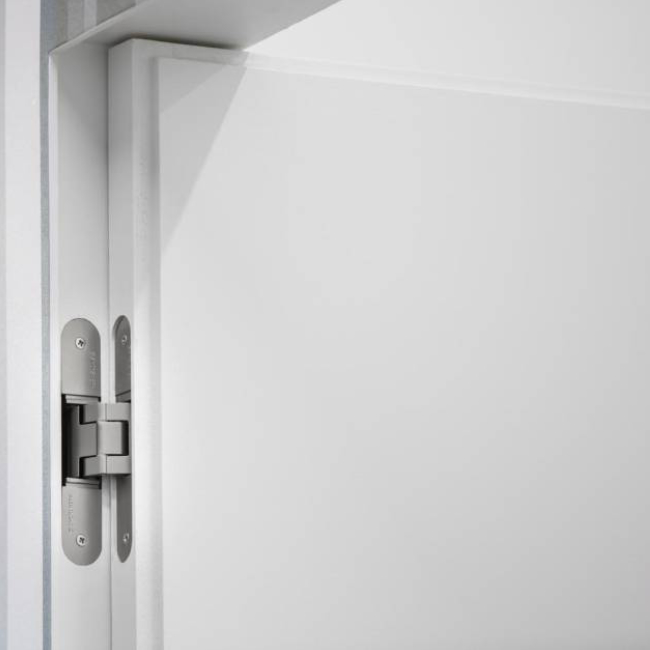
Hinge-Side Trick
Prefer a physical cue? Look at the hinges:
- Hinges on the right = right-hand door.
- Hinges on the left = left-hand door.
Pro tip: think “hinge = pivot side.”
Symmetry and Aesthetics: Harmonizing Multiple Doors in a Hallway
In a corridor with several consecutive doors, designers often aim for visual consistency:
- all handles aligned;
- doors swinging in the same direction to avoid conflicts;
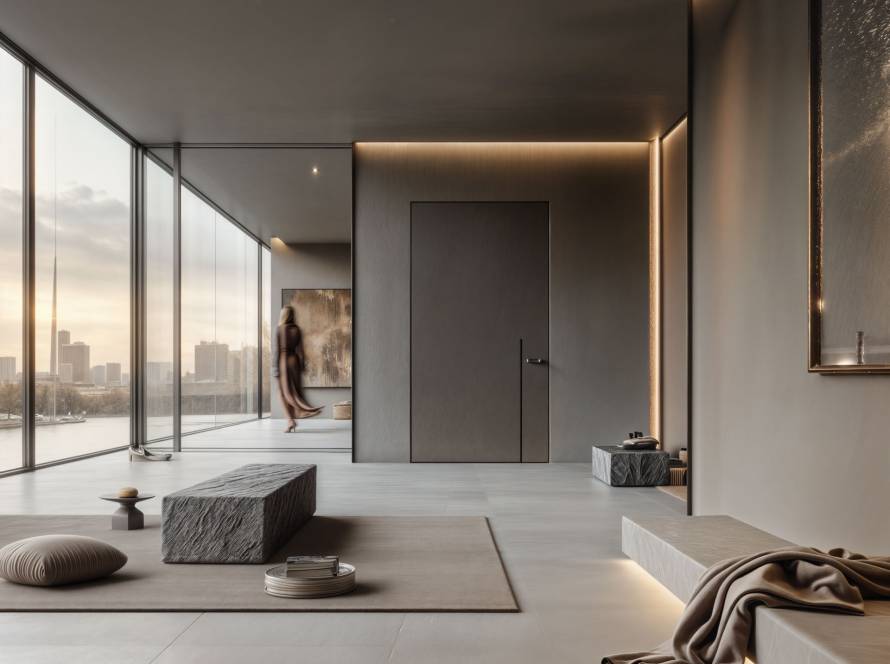
- minimalist design choices (recessed handles, silent hardware, flush thresholds).
Renovation: What the Quebec Building Code Says
For existing homes, the code is generally flexible, but it still requires:
- minimum clearances;
- no obstacles in evacuation paths;
- specific mandatory orientations in new residential units.
In light renovation projects, you usually have a good amount of leeway.
Design & Flow Tips
Quebec interior design trends emphasize functionality and durable materials. Here’s how to blend door orientation with aesthetics.
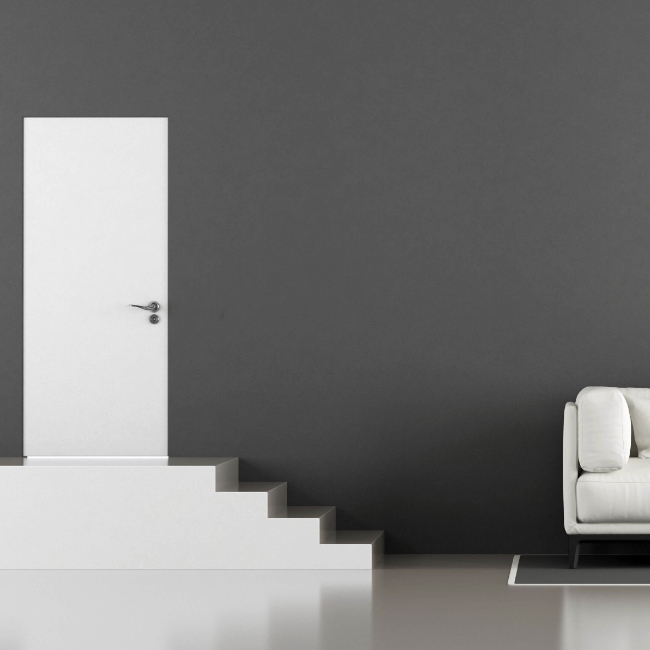
Learn more about our custom interior doors with the Flush Wall collection.
Coordinate with Durable Materials
Whether you choose solid wood, FSC-certified wood, painted MDF, or a laminated panel, consider the details:
- a door opening toward a textured wall may rub over time;
- light wood in a bright condo should be positioned to provide the best visual perspective.
Lofts and compact units often benefit from modern solutions like sliding doors or minimalist pivot hardware.
How to Reverse an Existing Door
Good news: you can reverse the swing direction of many interior doors.
General steps (simple, but often best left to a pro):
- Remove the door and hinges.
- Fill the old mortises.
- Drill and carve new hinge locations.
- Reinstall the handle on the correct side.
- Adjust the frame and clearance.
It’s an affordable solution to improve a room without a full renovation.
Learn how to install a pre-hung interior door.
Frequently Asked Questions (FAQ)
How do I know if my door is left-hand or right-hand?
Look at the side where it opens: hinges on the right → right-hand door; hinges on the left → left-hand door.
What is the best interior door swing direction?
The one that provides the best clearance, avoids furniture, and follows natural circulation.
Can you reverse a left-hand or right-hand door?
Yes—with basic carpentry or help from a professional.