

Table of Contents
- At a glance: Today’s most popular bathroom colours
- What are the trending bathroom colours?
- How to choose colours that work together in your bathroom?
- What colour should you choose for your bathroom vanity?
- How to embrace bathroom trends without regretting them later
- FAQ: bathroom colours and colour schemes
- At a glance: Today’s most popular bathroom colours
- What are the trending bathroom colours?
- How to choose colours that work together in your bathroom?
- What colour should you choose for your bathroom vanity?
- How to embrace bathroom trends without regretting them later
- FAQ: bathroom colours and colour schemes
Colour changes everything in bathroom design. It can make a small room feel bigger, warm up a space that feels too clinical, or give a vanity real personality. Trends can inspire your choices, but what really matters is how well your walls, tile, countertop, fixtures, and vanity complement one another. Here’s how to build a cohesive palette.
Key takeaways
- Warm palettes (neutrals, greens, browns, blues) are replacing cool greys.
- Stick to 2 or 3 main colours and compare undertones.
- The vanity is the ideal place to introduce a bolder colour.
- Always test your colours in the room’s actual lighting.
Overview
At a glance: Today’s most popular bathroom colours
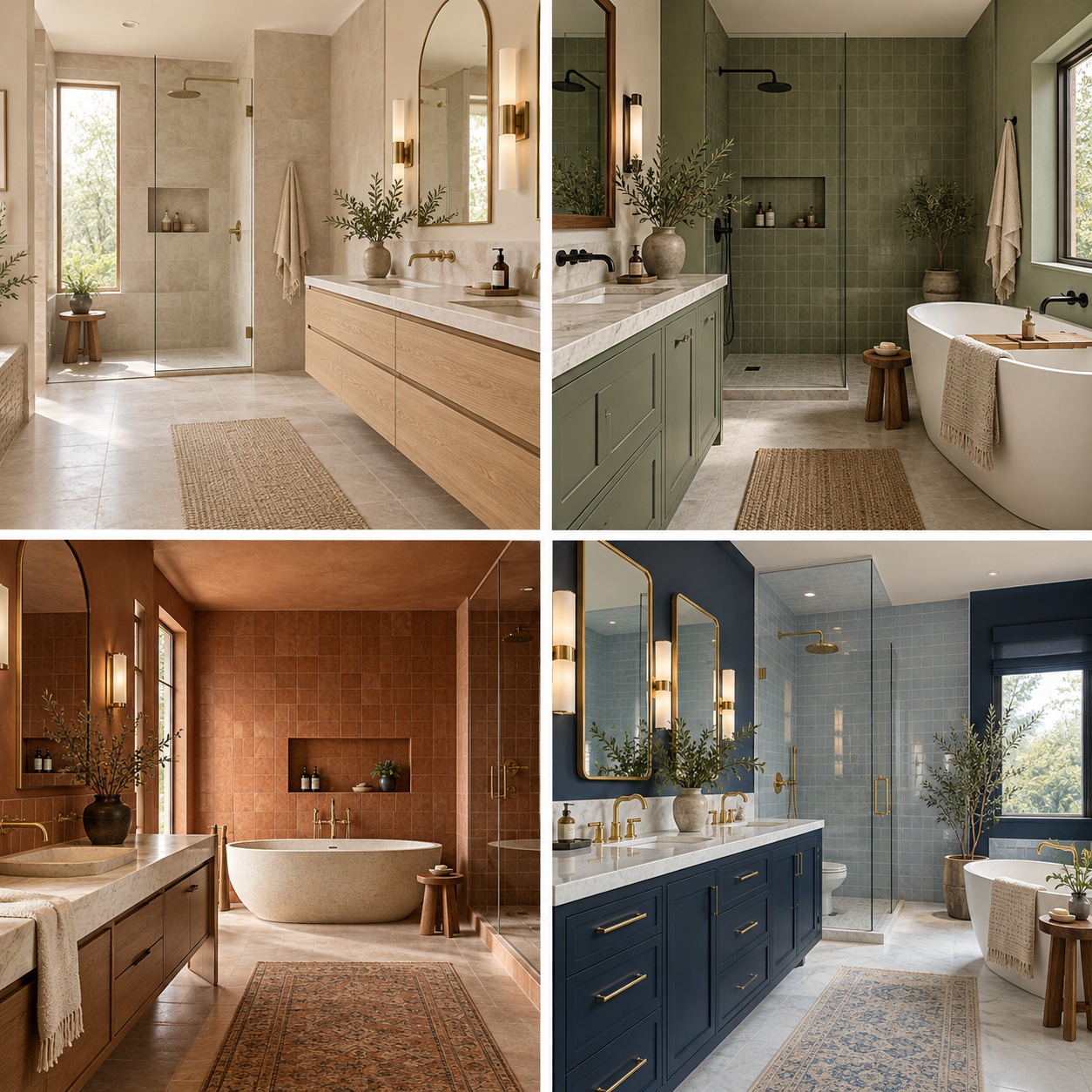
Today’s bathrooms are all about warmth. Five colour families stand out: warm neutrals (beige, greige, off-white), soft greens, browns and earth tones, soft or deep blues, and natural wood. Cool greys and stark whites are making way for natural materials and layered, tone-on-tone palettes.
Trends
What are the trending bathroom colours?
Beige, greige, and off-white: a warm, timeless base
These neutrals create a bright, airy feel without the coldness of pure white. Pair them with light oak for a Scandinavian look, or with stone and brushed brass for a more upscale finish.
Sage, olive, and natural tones: the spa effect
Green evokes nature and brings a sense of calm to the room. Sage pairs well with warm white and medium-tone wood, while deeper olive looks best alongside beige tile and matte black fixtures.
Brown, terracotta, and earth tones: added depth
These rich, earthy shades bring warmth and depth to spacious bathrooms. A terracotta wall works well with a cream countertop and brass accents, while chocolate brown on the vanity anchors a light-coloured room.
Soft or deep blue: from calm to contrast
Pale blue feels fresh without feeling cold when it’s balanced with wood. Navy creates an elegant contrast with warm white tile and gold hardware.
Method
How to choose colours that work together in your bathroom?
-
Limit your palette to 2 or 3 main colours
A well-designed bathroom colour scheme is built on a dominant colour (walls or tile), a secondary colour (often the vanity), and an accent (metals, accessories). Go beyond that, and a small room can quickly feel cluttered.
-
Coordinate walls, tile, countertop, and fixtures
Start with the element that’s hardest to change, usually the tile or the countertop, then choose your other colours based on their undertones. Here’s an example of a complete palette: warm beige walls, a medium-tone wood vanity, soft green tile, and brushed brass fixtures.
-
Adapt your colours to the room’s light and size
In a small, windowless bathroom, lighter shades reflect artificial light better. A large room filled with natural light can handle deeper colours without feeling dark.
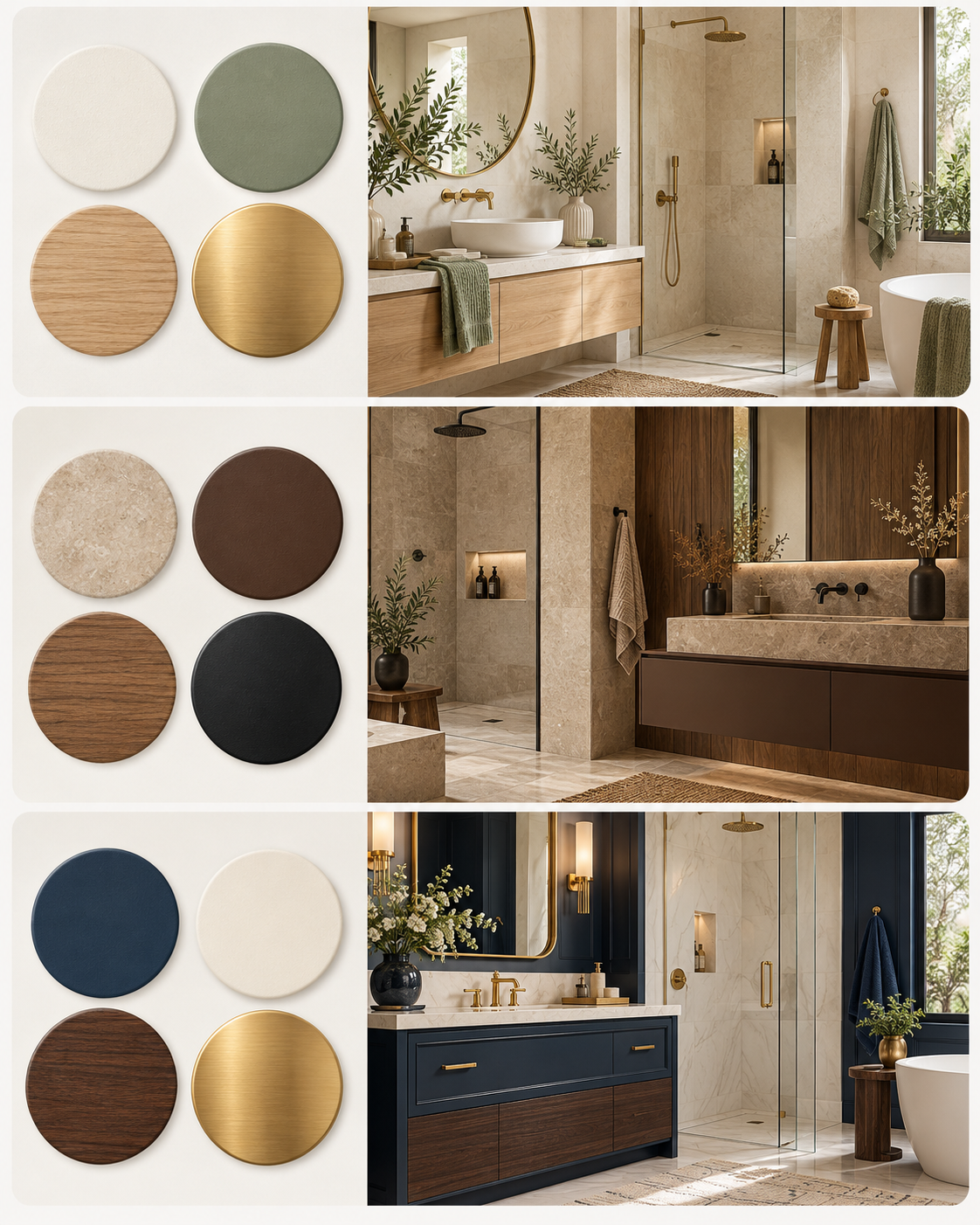
3 easy-to-recreate palettes
- Natural spa: off-white + sage + light oak + brushed brass
- Warm contemporary: stone beige + chocolate brown + wood grain + matte black
- Elegant contrast: deep blue + warm white + dark wood vanity + gold-tone fixtures
Vanity
What colour should you choose for your bathroom vanity?
After the walls and floor, the vanity is often the largest coloured surface in the room. According to Houzz (2026), 31% of homeowners choose a wood tone for their vanity, ahead of white, blue, grey, and green. Here are three directions to consider:
Wood grain
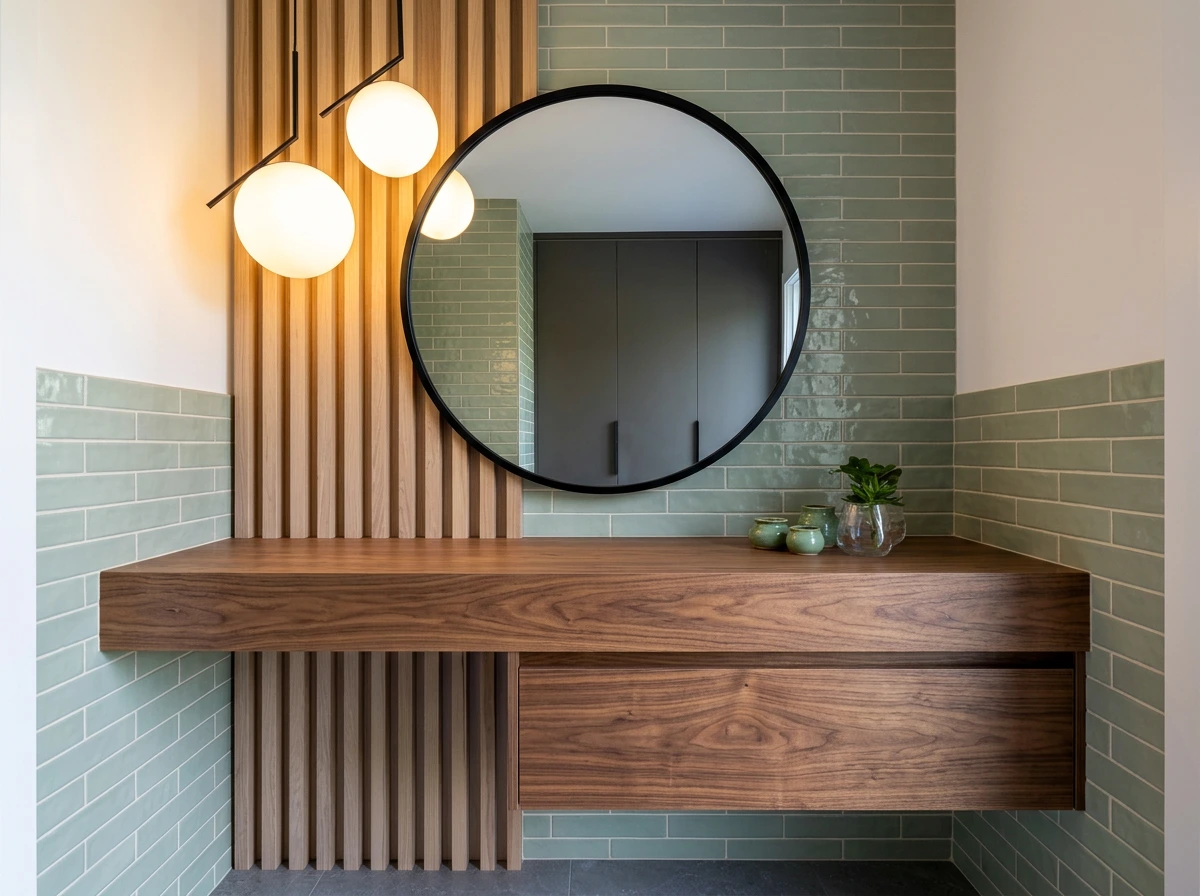
Warms up a neutral or green palette.
Matte solid colour
Understated and minimalist, ideal with Slab cabinet doors.
Dark contrast
Anchors a light room, for example with Shaker cabinet doors for a classic or transitional style.
Explore the available cabinet door colours to find the finish that fits your palette, then compare styles across our custom cabinet door collections.
Expert tip
How to embrace bathroom trends without regretting them later
Keep elements that are expensive to replace, like tile and countertops, in timeless tones. Save bolder colours for the vanity, a painted accent wall, or textiles, which are easier to change in a few years. Aim for harmonious undertones rather than identical colours: Sage green and honey oak work beautifully together because they share warm undertones.
FAQ: bathroom colours and colour schemes
What colour makes a small bathroom look bigger?
Light, warm shades like off-white or greige reflect light. Using the same colour on the walls and tile also eliminates visual breaks.
Can you put a dark vanity in a small bathroom?
Yes, as long as the walls, floor, and countertop stay light. The vanity then becomes a focal point without darkening the room.
Should your vanity match the floor or the countertop?
Not necessarily. Choose complementary undertones and a little contrast between the vanity and flooring so the room doesn’t feel too uniform.
Which bathroom colours stay timeless the longest?
Warm neutrals and natural wood age well because they adapt to new accessories without a major renovation.
To get your bathroom colour scheme right, start with the mood you want, factor in the room’s actual light, and coordinate the vanity with the rest of your materials. Before making a final decision, nothing beats seeing a sample in the room, next to the tile and countertop.