

Table of Contents
- Why Interior Finish Is a Strategic Choice
- The Main Categories of Interior Finishes
- Matching Finishes to Your Home’s Style
- The Role of Interior Doors in Finish Consistency
- Choosing a Finish Based on Room Use
- Technical Criteria to Consider Before Choosing a Finish
- Benefits of a Custom Door
- Common Mistakes to Avoid When Choosing Interior Finishes
- Finish as a Visual Signature
- Why Interior Finish Is a Strategic Choice
- The Main Categories of Interior Finishes
- Matching Finishes to Your Home’s Style
- The Role of Interior Doors in Finish Consistency
- Choosing a Finish Based on Room Use
- Technical Criteria to Consider Before Choosing a Finish
- Benefits of a Custom Door
- Common Mistakes to Avoid When Choosing Interior Finishes
- Finish as a Visual Signature
Interior finishes play a defining role in how a space is perceived. Walls, ceilings, millwork, and doors all work together to create a cohesive, functional, and lasting atmosphere. The choice of finish, whether paint, wood veneer, or architectural panel, shapes not only the aesthetic but also the brightness, maintenance needs, and longevity of every surface.
Interior doors are often treated as an afterthought, yet they are major structural elements. Their finish determines the visual continuity of an interior and deserves the same careful thought as walls or floors.
Key Takeaways
- In high-traffic areas like hallways, kitchens, and frequently used doors, choose a satin, semi-gloss, or washable finish over a flat one.
- For a clean, cohesive look, coordinate your doors with the walls, millwork, or floors rather than choosing them in isolation.
- To add character without overhauling the entire room, use an accent door or wood veneer as a focal point.
- Before committing to a finish, always consider the room’s purpose, lighting conditions, maintenance needs, and substrate compatibility.
Why Interior Finish Is a Strategic Choice
Impact on the Overall Atmosphere
Even before furniture is in place, surface finishes define the mood of a space.
- Flat/matte finish: absorbs light, creates a soft and subdued ambiance
- Satin or gloss finish: reflects light for a brighter effect
- Textures and materials: shape how warm, modern, or refined a space feels
A poor combination of finishes can make a room feel heavy, while a consistent approach strengthens the overall visual balance.
Decorative Finish vs. Functional Finish
Every finish has an aesthetic dimension, but some also serve a technical purpose. A matte paint finish conceals wall imperfections, while a gloss finish makes cleanup easier in kitchens and bathrooms. Wood veneer protects the substrate while adding visual value. Understanding this duality helps avoid costly mistakes and extends the life of your surfaces.
An effective finish must balance aesthetics with practical performance.
| Finish Type | Key Advantage | Limitation |
|---|---|---|
| Matte paint | Conceals imperfections | Harder to clean |
| Satin paint | Easy to maintain | Shows surface flaws more readily |
| Wood veneer | Warmth and perceived value | Higher cost |
| Architectural panel | High-end look | More complex installation |
The Main Categories of Interior Finishes
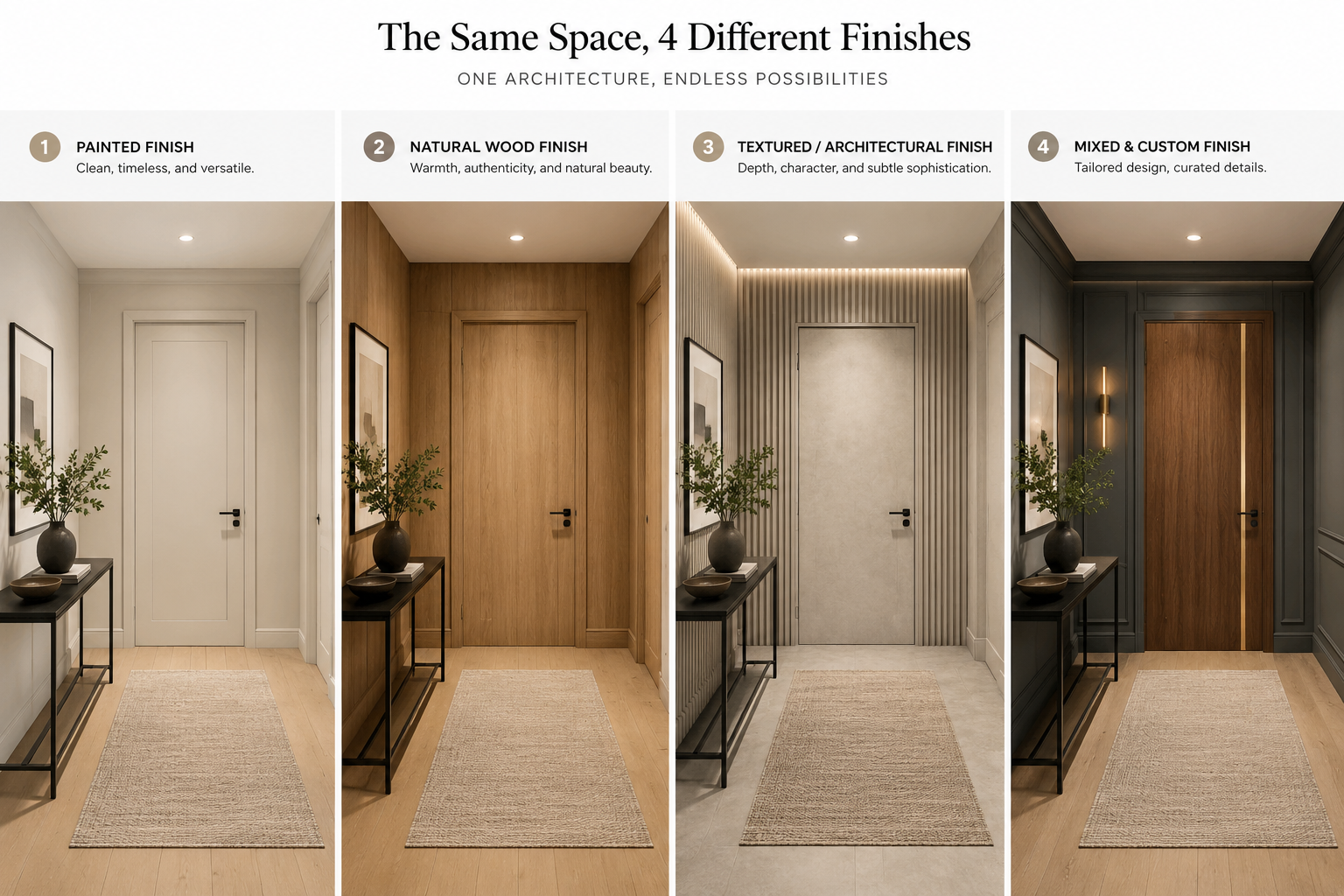
Painted Finishes
Paint remains the most versatile solution.
- Wide range of colours and sheens
- Works on walls, ceilings, millwork, and doors
- Easy to touch up and maintain
Neutral tones provide a timeless base, while deeper colours help define or accentuate specific areas. Each sheen level has its strengths: matte hides surface imperfections, satin is easier to clean, and gloss maximizes light reflection.
Natural Wood and Veneer Finishes
Natural wood brings warmth that no other material can truly replicate. Veneer delivers the look of solid wood at a lower cost, with better dimensional stability. The wide variety of available species makes it adaptable to very different contexts.
Commonly used species:
- Oak
- Maple
- Walnut
- Cherry
Textured and Architectural Finishes
Grooved panels, wainscoting, mouldings, polished concrete: used with restraint, these add depth and character without relying on colour.
Ideal for:
- Accent walls
- Entryways
- Stairwells
Mixed and Custom Finishes
More and more projects combine multiple materials: a painted frame with a veneered panel, a textured base topped with a smooth finish. These hybrid approaches allow for a personalized space but require careful planning.
- Paint + wood
- Metal inserts
- Integrated decorative panels
These solutions are most common in high-end residential or commercial projects.
Matching Finishes to Your Home’s Style
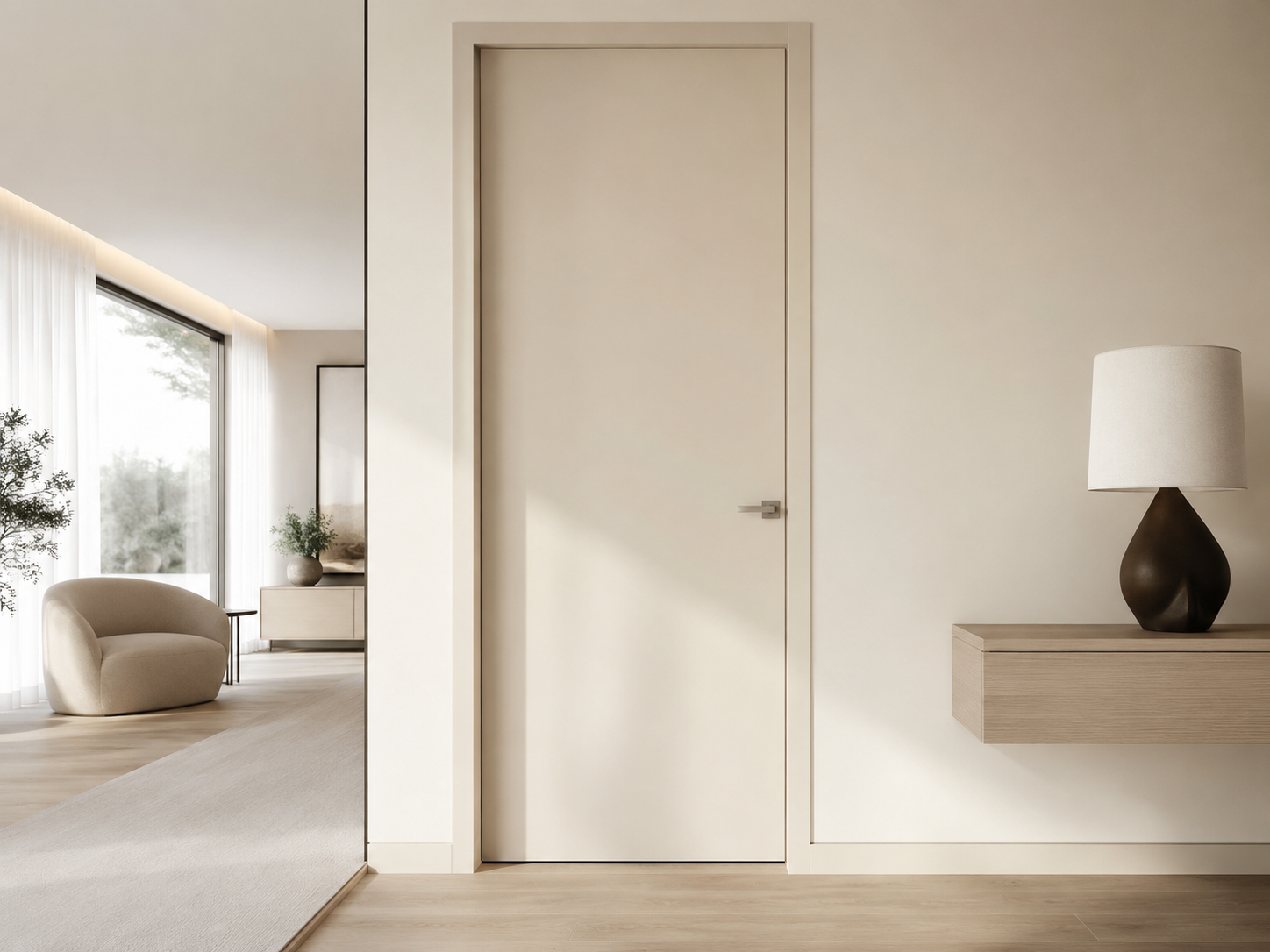
Contemporary and Minimalist
- Smooth surfaces
- Neutral colours
- Doors with no moulding or very simple profiling, often painted or lacquered
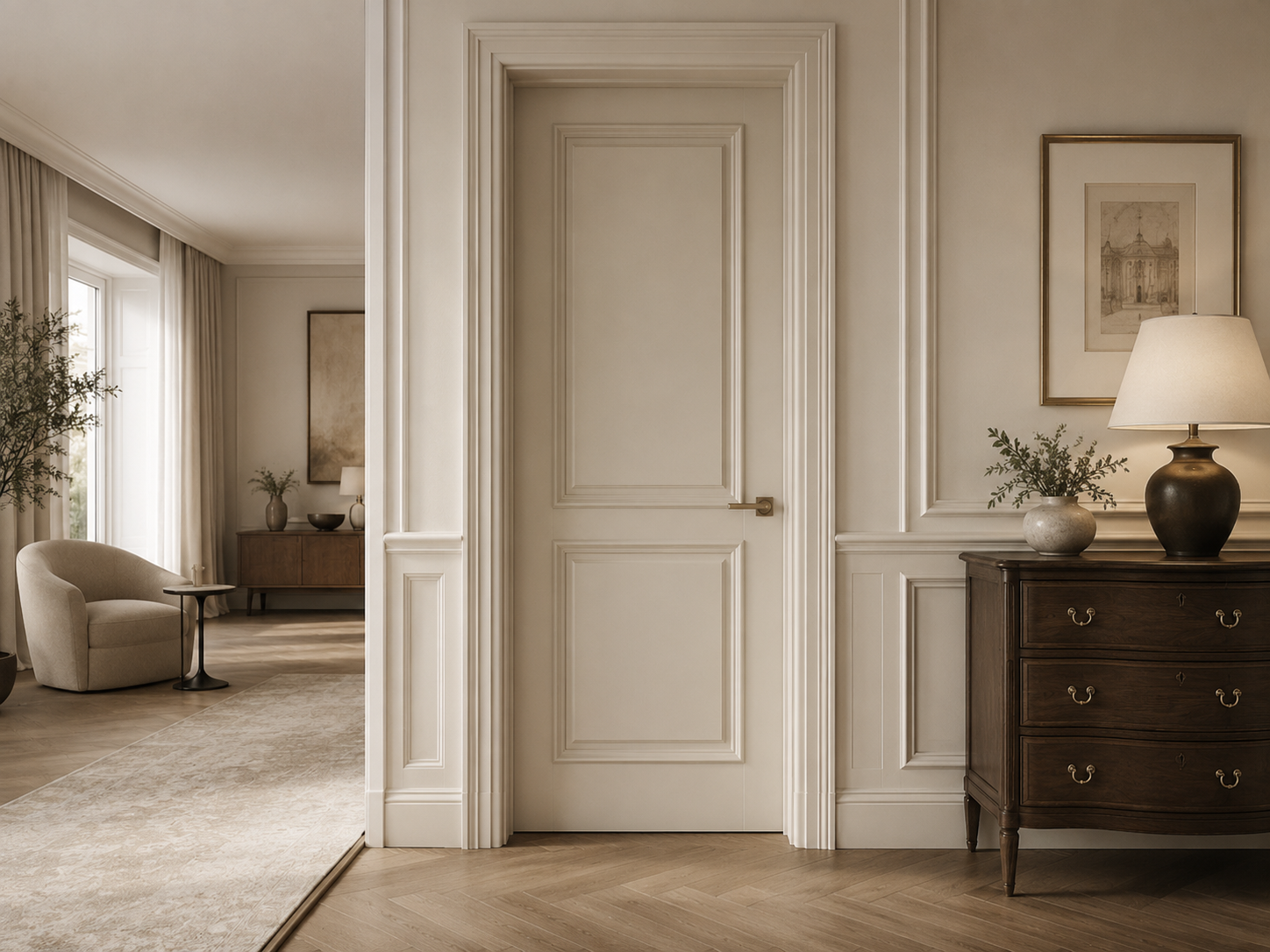
Classic and Timeless
- Traditional millwork
- Panelled doors
- Understated tones and repeated motifs
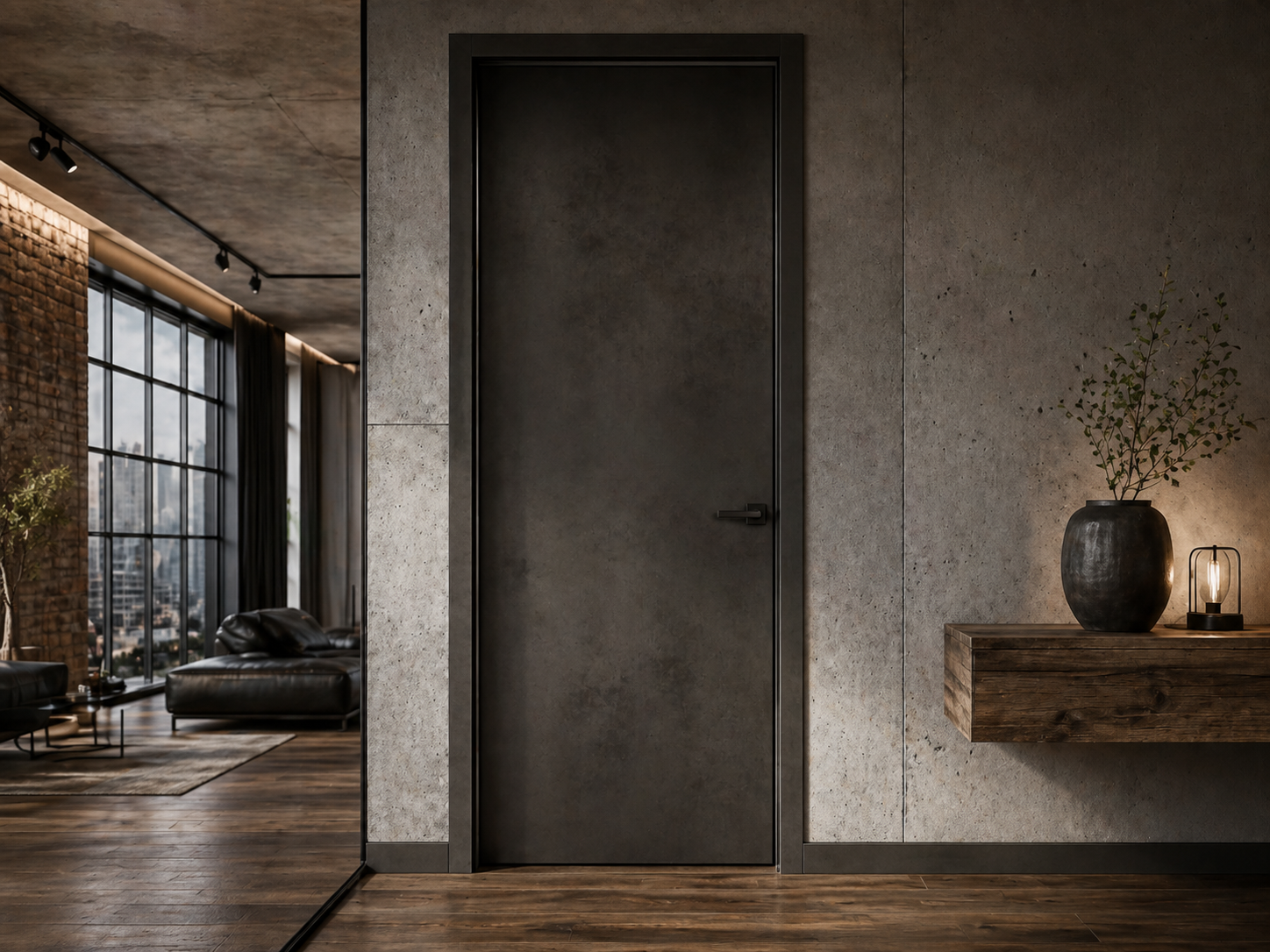
Industrial or Modern
- Raw materials (concrete, metal, reclaimed wood)
- Dark colours
- Bold doors, sometimes used as contrast
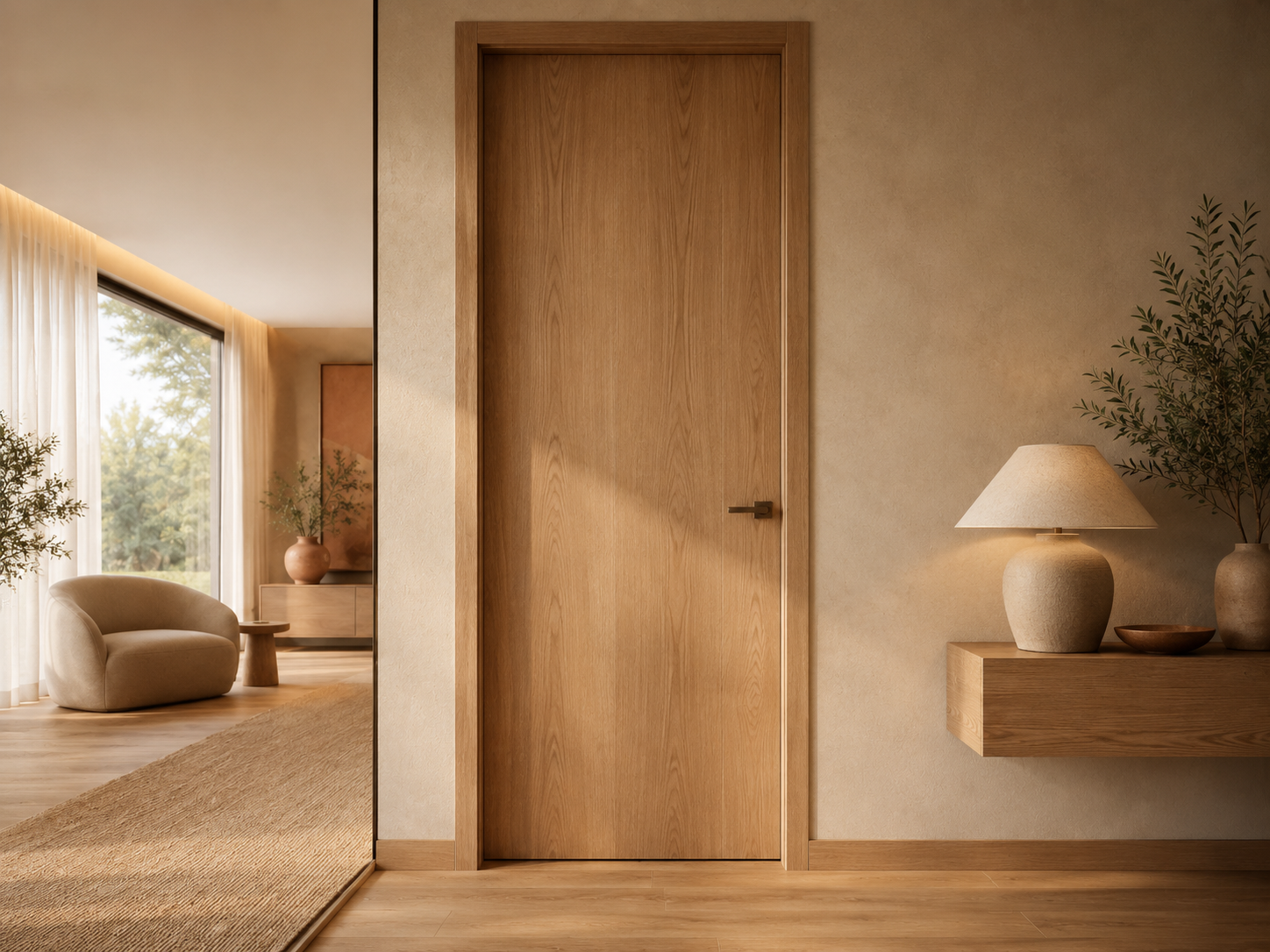
Warm and Organic
- Natural wood as the dominant material
- Matte finishes
- Earthy tones and soft textures
For a minimalist interior, explore our frameless doors.
The Role of Interior Doors in Finish Consistency
The Door as a Full Architectural Element
Doors are often chosen last, almost by default. That is a mistake. A door takes up visual space, frames openings, and contributes to the identity of a hallway or living room. Treating it as a secondary accessory is a missed design opportunity.
The interior door:
- Defines circulation flow
- Creates rhythm between spaces
- Actively contributes to the overall design
Its height, finish, and integration directly influence how quality is perceived in a space. For a contemporary project, choosing a modern interior door is precisely how to reinforce that visual coherence.
Visual Continuity and Coherence
When the floor is light oak, the walls a warm beige, and the doors arrive in standard bright white… something feels off. Doors should extend the material language of the room, not clash with it.
To avoid visual breaks:
- The door must relate to the walls and millwork
- Any contrast should be intentional, never accidental
Why a Poorly Finished Door Undermines a Space
A door with an uneven paint finish or a colour that clashes with its surroundings draws attention for all the wrong reasons. Scratches, differences in sheen, or mismatched tones catch the eye and diminish the overall space. It is often something visitors sense without being able to name it. A new finish (paint, veneer, or panel) can often resolve the issue without replacing the door. Details matter.
Getting the Most Out of Interior Doors with the Right Finish
Painting an interior door is a great move regardless of the aesthetic direction, whether you are going for restraint or deliberate contrast. Two effective approaches:
- Tone-on-tone
- Visually expands the space
- Ideal for pared-back interiors
Painting the door in the same shade as the walls creates a gentle continuity that makes the space feel larger. This is especially effective in small rooms or narrow hallways.
- Accent door
- Black, deep blue, dark green
- Anchors the space and creates a focal point
A matte black door in a white hallway makes a statement. A bottle green door in a neutral room becomes a signature. The accent door trend is a way to add personality without a full overhaul. A satin finish holds up better against fingerprints: a smart choice for busy hallways. To go further, exploring trending colours for interior doors can help you find a shade that fits your home’s style.
Other Ways to Finish an Interior Door
Beyond paint, a few options allow for an even higher level of customization.
Wood veneer is ideal for covering a damaged door or bringing in an authentic warmth that no paint can truly replicate. Choosing the right species (oak, walnut, maple) creates a natural continuity with existing floors or millwork.
Decorative panels, whether grooved, moulded, or smooth, transform a standard door into an architectural feature. The result looks high-end without necessarily requiring a custom budget. A great design move for classic or contemporary interiors looking for more character.
Wallpaper or specialty finishes work well in lower-traffic spaces: entry corridors, built-in wardrobe doors, home offices. In commercial settings, they can also reinforce brand identity. One thing to keep in mind: always confirm that the substrate (MDF, wood, laminate) is compatible with the chosen product before proceeding.
Choosing a Finish Based on Room Use
Common Areas
(Living Room, Kitchen, Open Plan)
These spaces see heavy use and accumulate splashes. Opt for washable, durable finishes. A satin or semi-gloss on kitchen doors is often a smarter choice than matte.
Bedrooms and Private Spaces
Prioritize soft, calming finishes with low light reflectivity. Matte or eggshell work well here. Warm textures like natural wood contribute to a cozy, restful atmosphere.
Home Offices
Neutral finishes, neither too stimulating nor too flat, tend to work well. Light wood or a subtle textured finish adds character without distraction.
Commercial and Professional Spaces
Durability is the priority. Finishes must withstand heavy traffic, frequent cleaning, and physical wear, all while reflecting the brand identity.
Technical Criteria to Consider Before Choosing a Finish
Before being drawn in by a visual effect, it is worth evaluating:
- Wear resistance: reinforced at contact points
- Maintenance: frequency and ease of cleaning
- Lighting: how much light is reflected or absorbed
- Substrate compatibility: wood, MDF, metal
A poorly matched finish leads to premature deterioration and added costs. A door built to accept a specific finish offers better stability, a more even application, and greater durability.
Finish Comparison Chart
| Finish Type | Best For | Washability |
|---|---|---|
| Matte | Bedrooms, quiet living rooms | Low |
| Velvet / Eggshell | Living rooms, offices | Medium |
| Satin | Hallways, kitchens, accent doors | Good |
| Semi-gloss | Kitchens, bathrooms, millwork | Very good |
| Gloss / Lacquered | Cabinet doors, decorative accents | Excellent |
| Oiled wood veneer | Interior doors, millwork | Medium |
| Varnished wood veneer | Interior doors, common areas | Good |
| Painted texture | Architectural accents | Good depending on surface finish |
Benefits of a Custom Door
- Optimal substrate preparation
- Compatible with a variety of finishes
- Possibility of future reconfiguration
Specialized manufacturers like Dörr Industries design doors built to meet the aesthetic and technical demands of each project, ensuring a seamless integration into the environment.
Common Mistakes to Avoid When Choosing Interior Finishes
Layering textures without a unifying concept. You might love polished concrete, natural wood, and brushed metal, but combining them without a common thread creates a cluttered result. A simple rule: choose two or three materials and use them consistently.
Overlooking the doors in the overall concept. This is the most common mistake. Hours are spent choosing wall colours, then the first standard door available is picked. The result: a space where everything comes together except the doors.
Choosing a finish solely for its visual appeal. A beautiful finish on a poorly prepared surface, or one that is not suited to the intended use, will disappoint in the short term.
A curated palette of 3 to 5 materials is generally enough to achieve richness and harmony.
Finish as a Visual Signature
Interior finishes reveal the level of care put into a project. Interior doors, given their surface area and strategic placement, are an underestimated design lever. Whether painted, veneered, or architectural, they deserve the same attention as any other surface.
Expert guidance helps avoid mistakes, maximize durability, and ensure a lasting aesthetic coherence down to the smallest detail. Dörr Industries supports its clients in the manufacturing of quality interior doors, designed to accept the finishes that suit their project. Whether you are looking to cover a damaged door, make a bold statement in your hallway, or tie all your millwork together, the right starting point is always a well-made product.
Learn more about our custom interior doors with our Flush Wall collection.