

Table of Contents
Whether for aesthetic or practical reasons, hiding a door is an increasingly common design challenge in both residential and commercial projects. Fortunately, solutions exist, from accessible DIY tricks to the professional flush door that literally disappears into the wall.
Key Takeaways
- For a simple, budget-friendly concealment, tone-on-tone paint or wallpaper can work, but the door frame will still be visible.
- For a truly architectural and lasting result, the flush door with no visible frame is the most effective solution.
- For a light renovation, lean on decorative approaches; if the walls are open or you are building from scratch, plan for a frameless door from the start.
- The decision needs to be made early: concealed frame, invisible hinges, swing direction, and wall finish all need to be coordinated together.
Why Would You Want to Hide a Door?
Aesthetic and Architectural Reasons
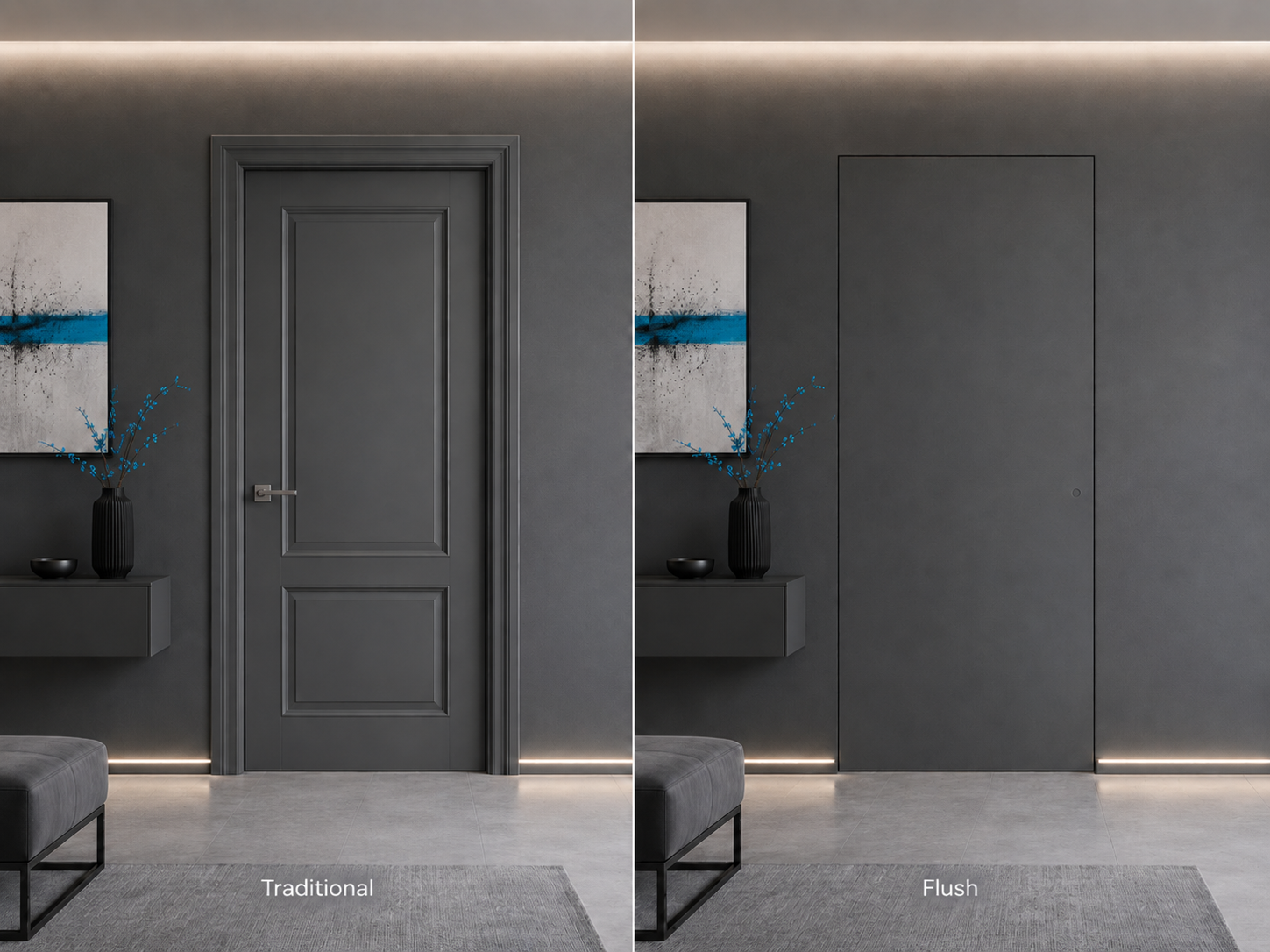
A traditional door with a visible frame, surface-mounted handle, and moulding can break the visual flow of a carefully designed wall. In a contemporary or minimalist interior, every detail counts. A door that stands out for the wrong reasons is something that quietly undermines the whole space.
Creating a Hidden Room or Discreet Passage
The idea of a secret door fascinates equally in residential and commercial settings. Whether to conceal a private office, a wine cellar, or simply to add a wow factor to a project, a hidden door creates a unique experience within a space.
Making the Most of a Wall or Tight Space
In a narrow hallway or a living room where every square foot matters, hiding a door in the wall allows you to maximize the use of surfaces. You reclaim an entire wall for shelving, a mirror, or a decorative panel, without sacrificing access to the room.
DIY Solutions for Concealing a Door
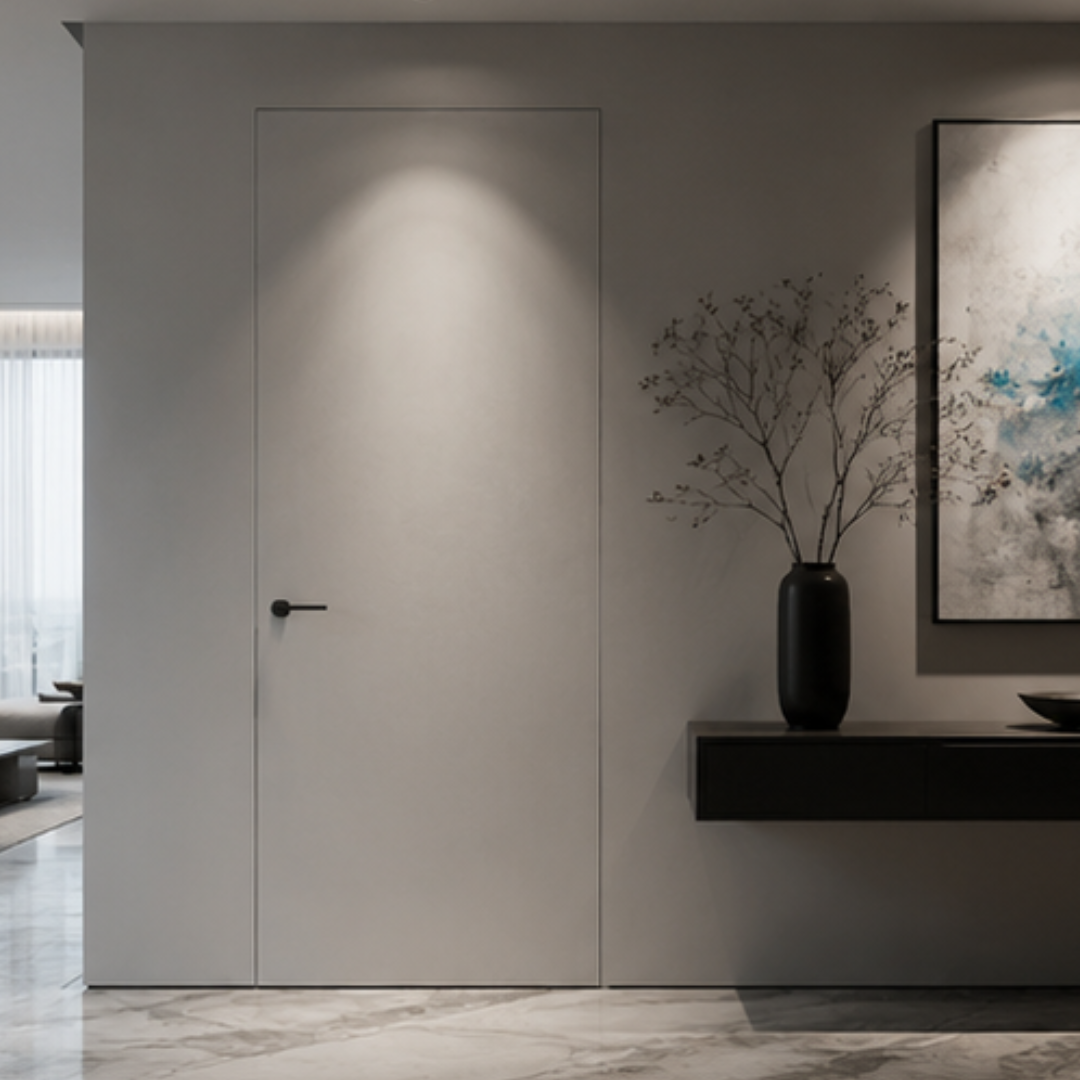
Paint the Door the Same Colour as the Wall
Concept: Applying the same colour and finish to both the door and the surrounding wall creates a visual continuity that minimizes the door’s presence.
- Choose an identical sheen level (matte on matte, eggshell on eggshell)
- Paint the frame at the same time as the door and wall
- Opt for a recessed or flush-mount handle to reduce protruding elements
Limitations: The frame and seams remain visible up close. The effect works better at a distance.
Use Continuous Wallpaper
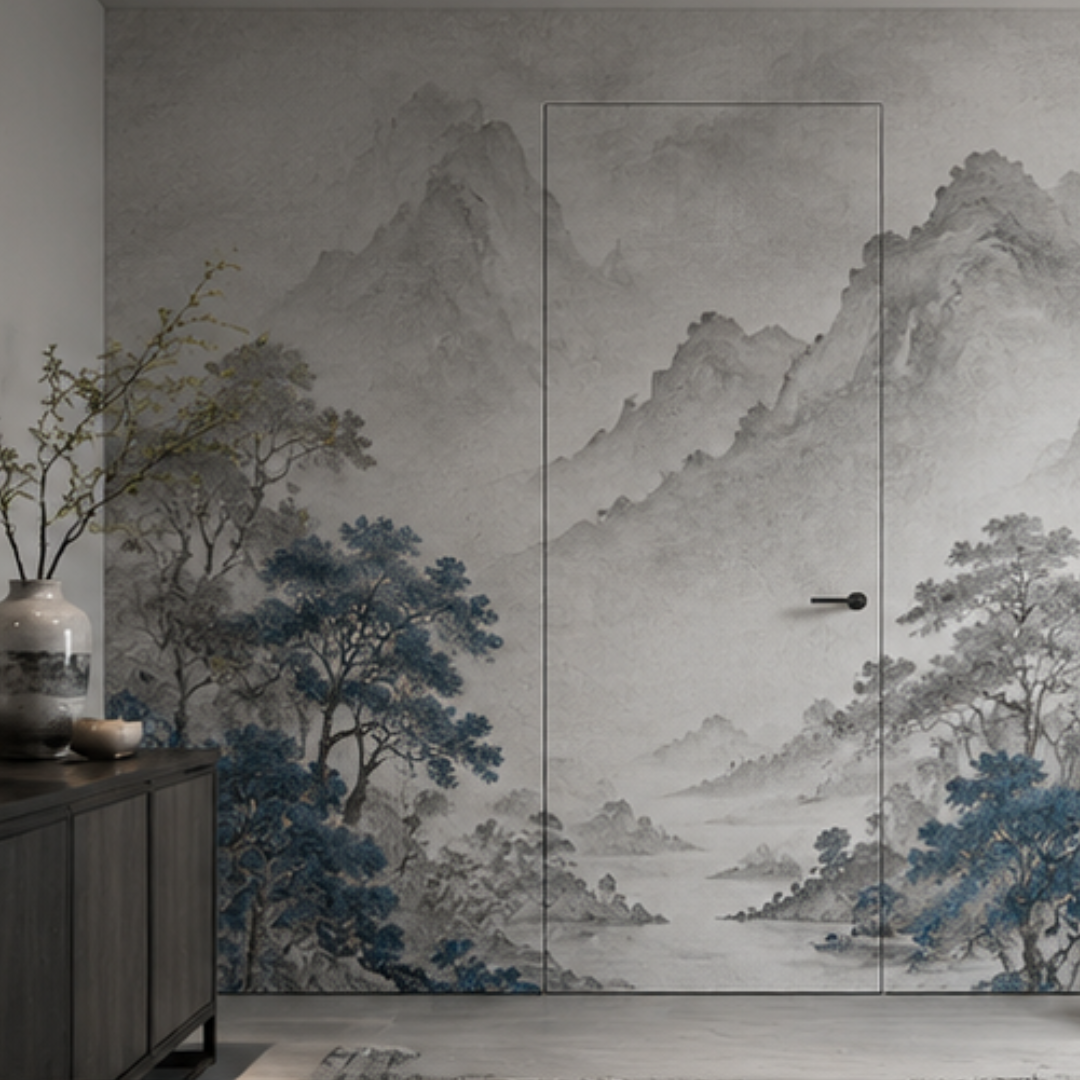
Applying a patterned wallpaper across both the wall and the door creates the illusion of a uniform surface.
- Carefully align the pattern between the wall and door
- Fill seams and mouldings with joint compound before applying
- Use a wallpaper durable enough to handle repeated opening and closing
Limitations: The seams will eventually wear or peel over time. The door frame remains a difficult obstacle to fully conceal.
Mount a Full-Height Mirror
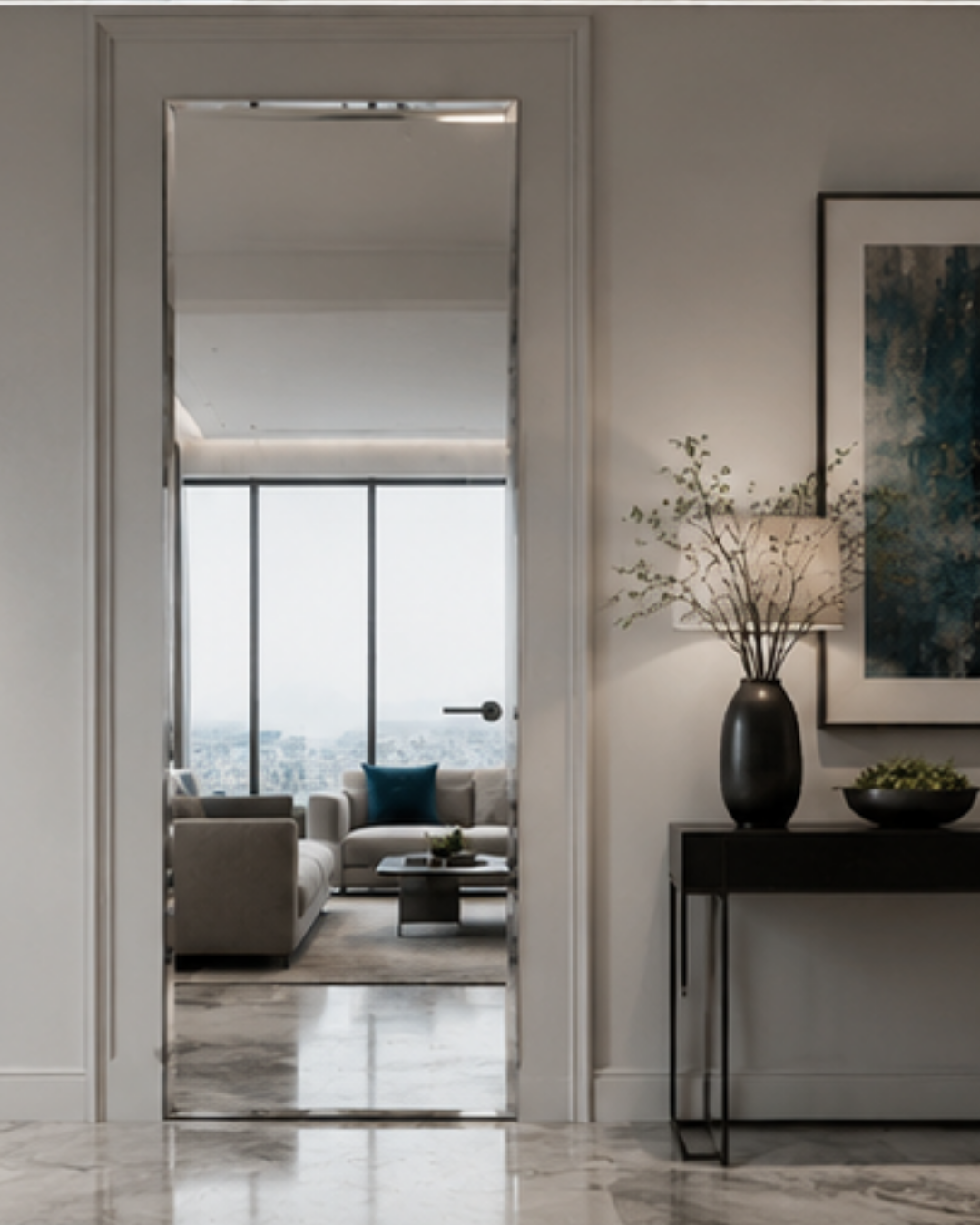
A large mirror mounted on the door creates a room-expanding effect while camouflaging the surface.
- Choose a frameless mirror for a more discreet look
- Align the mirror with other reflective elements in the room for visual consistency
Limitations: The weight of the mirror may limit the type of door used. The frame and clearance gap remain visible.
Conceal the Door Behind a Curtain or Textile Panel
A quick, budget-friendly solution: a full-height curtain effectively hides a closet door or a low-traffic interior door.
- Compatible with bohemian, Scandinavian, or classic styles
- Easy to remove or change with the seasons or evolving tastes
Limitations: Not ideal for high-traffic rooms. Gives a soft, textile result rather than an architectural one.
Turn the Door Into a Bookcase or Decorative Wall
False panels, light shelving, or wainscoting applied to the door can integrate it into a full decorative wall.
- The hidden bookcase effect is hugely popular in offices and living rooms
- Wainscoting or panels can align with the rest of the wall
Limitations: The design needs to be precise so seams do not reveal the opening. The added weight may affect how the door operates. Maintenance is more involved.
The Frameless Door: The Professional Solution for a Perfectly Seamless Wall
What is a flush door? It is a door designed to sit perfectly flush with the wall plane, with no visible frame, no exposed moulding, and often no protruding handle. It is built to receive the same finish as the surrounding wall.
How does a frameless door work? It relies on a concealed frame system built into the partition and invisible hinges or recessed hardware. An integrated frame for interior doors is precisely what creates that seamless transition between the wall and the opening. The alignment between the door and the wall is accurate to within a few millimetres, which requires custom manufacturing and meticulous installation.
Architectural Advantages of Invisible Doors
The most popular applications:
- Hide a closet or storage space in a bedroom or dressing room
- Conceal a bathroom or laundry room in a hallway or open-plan space
- Create a discreet passage to an office, cellar, or private room
- Integrate a door into a decorative wall or existing architectural panel
Invisible Door vs. Traditional Door: What Are the Differences?
| Criteria | Traditional Door | Flush Door |
|---|---|---|
| Visual impact | Prominent presence | Discreet or invisible |
| Contemporary integration | Limited | Optimal |
| Possible finishes | Standard paint | Paint, veneer, wallpaper |
| Added project value | Standard | High (residential and commercial) |
| Installation | Straightforward | Requires upfront planning |
How to Integrate a Flush Door Into Your Project
What to Plan for in the Wall
- Allow space for the concealed frame system when designing the partition
- Plan for the swing direction and the required clearance
- Confirm that the wall structure can accommodate the hinge system
Finish Options for an Invisible Door
The strength of the flush door lies in its finishing flexibility:
- Painted to match the wall: same colour, same finish, perfectly uniform result
- Integrated into a wood or panel wall: the grain or pattern continues from one surface to the other
- With wallpaper or decorative finish: the motif covers both the wall and the door without visible interruption
Working with a Specialized Manufacturer
A well-executed flush door demands precision manufacturing. The tolerances are tight: a few millimetres off and the effect falls apart. Working with a manufacturer who designs this type of door to measure and understands the installation constraints makes all the difference between a professional result and a costly disappointment.
From Decorative Trick to Architectural Solution
DIY solutions allow you to minimize a door’s presence on a limited budget. But for a truly integrated result, the flush door is the only option that completely erases the boundary between wall and opening. It is a design decision that is planned ahead of time and permanently transforms how a space feels.
FAQ
What is the best solution for hiding a door?
The most complete option is the flush door with no visible frame. Unlike decorative workarounds, it allows the door to be integrated directly into the plane of the wall.
Can an existing door be hidden without replacing it?
Yes, some approaches such as tone-on-tone paint, wallpaper, a full-height mirror, or decorative panels can reduce its visual presence. The result will still be less seamless than with a door designed to be invisible.
Does a frameless door need to be planned before construction begins?
Ideally, yes. The concealed frame, invisible hinges, and wall alignment all require upfront planning.
Can the same finish be applied to both an invisible door and the wall?
Yes. That is in fact one of the main advantages of a flush door. It can accept paint, veneer, wallpaper, or any continuous decorative finish.